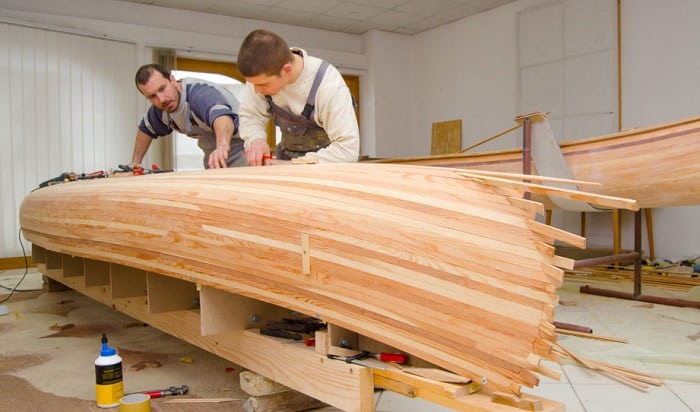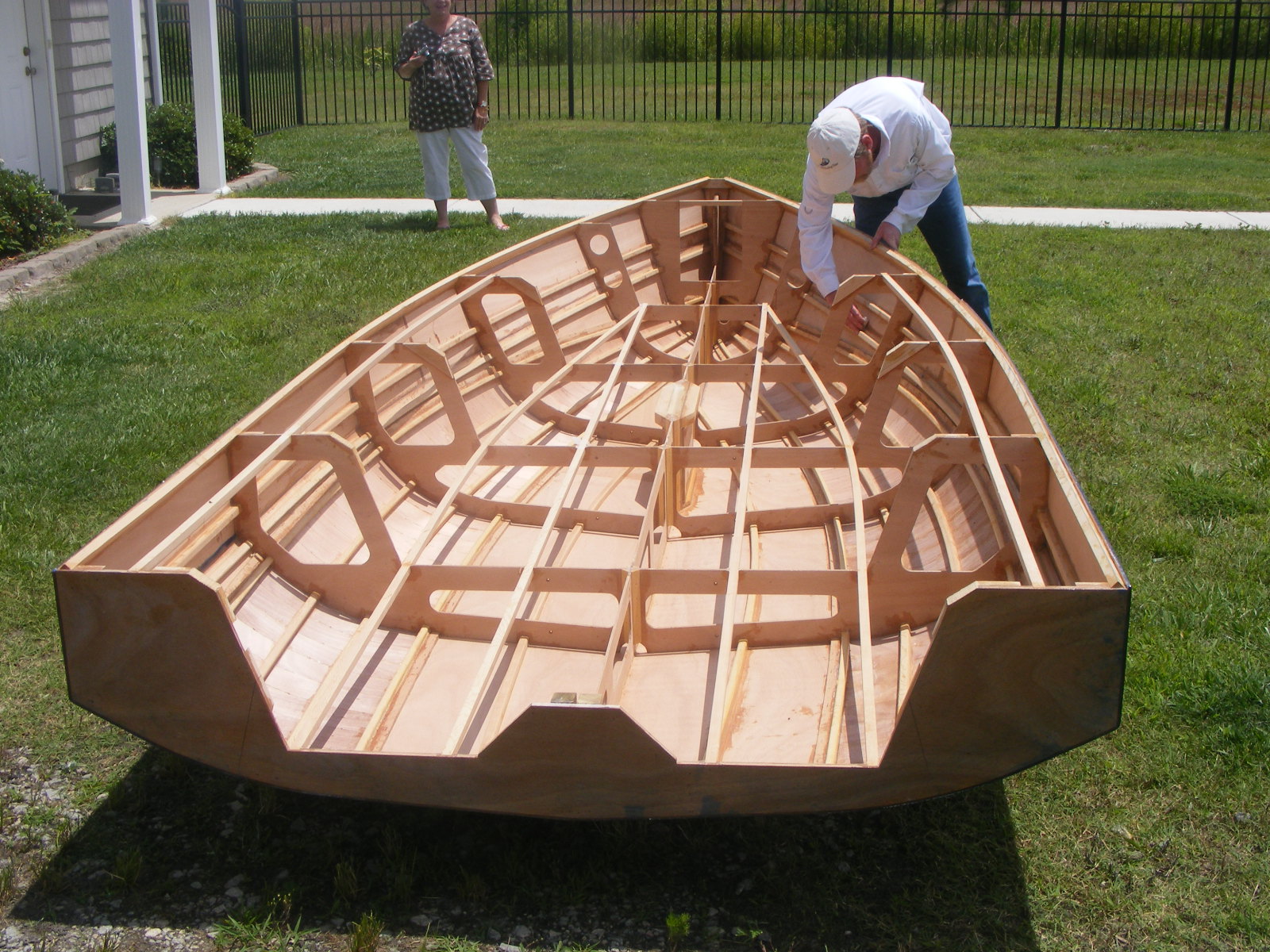
How to Build a Wooden Boat with Simple and Easy-to-Follow Plans

,
How to Build a Wooden Boat with Simple and Easy-to-Follow Plans

Beyond the Plans: Unveiling Hidden Gems in Wooden Boat Building

Building a wooden boat is a journey, not just a project. "How to Build a Wooden Boat with Simple and Easy-to-Follow Plans" offers a roadmap, but navigating that journey requires more than just following instructions. This review delves beyond the surface, exploring often-overlooked aspects and offering new perspectives for both seasoned craftsmen and enthusiastic beginners.

The Unsung Hero: Wood Selection and its Impact

Most plans focus on the "what" of wood selection (e.g., cedar, oak), but rarely delve into the "why" and "how" with the depth needed. This is crucial because wood properties dramatically influence the boat’s performance and longevity. Let's explore this further:

Q: Beyond the species, what specific qualities should I prioritize in my wood selection?

A: The answer isn't always readily apparent in basic plans. Consider these lesser-known factors:

  • Growth rate: Slow-grown wood has tighter grain, resulting in greater strength and durability. Look for certification or provenance information that confirms this.
  • Moisture content: This dramatically affects wood movement. Using kiln-dried lumber reduces warping and cracking, but requires careful acclimatization to prevent further changes once the boat is built. Proper moisture monitoring throughout the building process is essential â€" invest in a reliable moisture meter.
  • Specific gravity: This relates to density and strength. Higher specific gravity equals a stronger boat, but might also increase weight. Balance these factors based on your design goals.

The Art of the Joint: Beyond Basic Techniques

While the plans provide fundamental joinery, mastering advanced techniques can significantly elevate your boat's structural integrity and aesthetic appeal. Let's examine this critical aspect:

Q: How can I minimize potential weaknesses in traditional joints, considering real-world stresses?

A: Most plans show basic lap joints or mortise and tenon. However, understanding the mechanical properties of each joint and how stresses are distributed is crucial. Consider these enhancements:

  • Scarph joints reinforced with epoxy: This strengthens traditionally weaker joints by increasing the surface area and adding a robust adhesive bond. Recent research highlights epoxy’s superior performance in marine environments compared to traditional wood glue (e.g., studies on marine-grade epoxy durability from publications like the Journal of Composites Science).
  • Through-bolting critical joints: This provides extra security against racking and twisting forces, especially in areas subjected to high stress (e.g., stem to keel). Proper hole-drilling techniques and selection of corrosion-resistant fasteners are paramount.

Beyond the Blueprint: The Unexpected Challenges and Creative Solutions

Building a wooden boat inevitably presents unforeseen challenges. Here's where experience and resourcefulness come into play. A real-world example helps illustrate:

Story: A friend recently encountered a problem with his timber â€" a significant knot appeared unexpectedly in a critical part of the keel. Simply replacing the piece wasn’t feasible due to the custom cut. His innovative solution? He used a combination of epoxy reinforcement, carbon fiber patching, and meticulous fairing to strengthen the weakened area. The result was a stronger keel than originally planned, proving that challenges can lead to unique solutions.

This highlights the importance of adaptability and problem-solving skills, often underrepresented in instructional materials. Embrace the unexpected and trust your abilities to find creative fixes. The final product is often more rewarding because of the unique challenges overcome.

In conclusion, "How to Build a Wooden Boat with Simple and Easy-to-Follow Plans" provides a solid foundation. However, success hinges on a deeper understanding of wood properties, advanced joinery techniques, and the ability to adapt to unexpected challenges. By focusing on these often-overlooked aspects, boat builders can create not just a functional vessel, but a testament to their craftsmanship and resilience.

Read more →

How to Scale Fan Boat Plans for Larger or Smaller Boats

,
How to Scale Fan Boat Plans for Larger or Smaller Boats

Beyond the Blueprint: Unconventional Scaling of Fan Boat Plans

Scaling fan boat plans isn't just about multiplying dimensions; it's about understanding the intricate dance between size, power, and hydrodynamics. While many resources offer straightforward scaling techniques, this article delves into the less-discussed nuances, offering fresh perspectives for hobbyists, builders, and educators alike. We'll explore these challenges through a question-and-answer format, weaving in real-world examples to illustrate the points.

The Scaling Conundrum: More Than Just Bigger Numbers

Simply enlarging a fan boat plan proportionally rarely yields the desired results. Why? Because the physics governing a vessel's performance aren't linear.

Q: If I double the dimensions of a fan boat plan, will I get a boat that's twice as fast?

A: Absolutely not. Doubling linear dimensions increases the boat's volume eightfold (2³). This means significantly more displacement, requiring a much more powerful engine to maintain speed. Furthermore, the hydrodynamic resistance increases disproportionately. Imagine trying to push a cube through water â€" a larger cube encounters far greater resistance than a proportionally smaller one. A real-world example: A meticulously scaled-up model of a successful racing fan boat might be hopelessly underpowered, even with a substantially larger engine.

Q: How can I accurately predict the performance changes when scaling?

A: Advanced hydrodynamic modeling software is the most accurate approach. Programs like Computational Fluid Dynamics (CFD) software can simulate water flow around the hull at different scales, providing crucial data on drag, lift, and overall performance. However, this requires significant expertise and computing power, making it inaccessible to many hobbyists.

A simpler, albeit less precise, method involves using scaling factors based on established principles of naval architecture. For example, you might find that increasing the length of the hull by a factor of 1.2 requires increasing the engine power by a factor closer to 1.5 or even 2 to maintain a comparable speed. This requires extensive research and experience, preferably with existing data for similar vessels.

Beyond the Hull: Material Considerations and Structural Integrity

Scaling affects more than just propulsion; it significantly impacts structural integrity. A small change in scale can lead to catastrophic failure if not carefully considered.

Q: My scaled-up fan boat plan uses thicker plywood. Is this sufficient for structural integrity?

A: Not necessarily. While thicker plywood increases material strength, it might not compensate for the increased stress caused by the larger scale. Simply increasing material thickness without considering the overall geometry and stress distribution is a common mistake. Consider consulting with a structural engineer, especially for larger scale projects. They can utilize finite element analysis (FEA) to model stress distribution and ensure the boat can withstand the forces it will encounter.

Q: What about material choices in general when scaling?

A: Scaling often necessitates a change in materials. A small boat might be built with lightweight plywood, but a larger version might demand stronger materials like fiberglass or even aluminum for adequate strength and stiffness. The choice should be determined by a comprehensive assessment of anticipated stresses and environmental conditions.

Lessons Learned: Real-World Examples and Best Practices

One hobbyist, attempting to double the size of a successful small fan boat design, underestimated the increased hull resistance. Despite using a significantly larger engine, the scaled-up boat performed poorly, barely achieving the speed of the original. This highlights the importance of carefully considering the non-linear relationships between size, power, and hydrodynamics.

Best Practices for Scaling Fan Boat Plans:

  • Start small: Build a smaller prototype to test your design and refine it before scaling up.
  • Consult experts: Seek advice from experienced boat builders or naval architects, especially for larger projects.
  • Use modeling software (if possible): CFD or FEA simulations can provide valuable insights.
  • Consider material properties: Choose materials appropriate for the size and intended use.
  • Iterate and test: Scaling is an iterative process. Be prepared to make adjustments based on your results.

Scaling fan boat plans is a complex undertaking requiring a deep understanding of hydrodynamics and structural engineering. By moving beyond simple proportional scaling and embracing the nuances of fluid dynamics and material science, builders can achieve successful and safe results, transforming ambitious plans into reality.

Read more →

How to Make a Wooden Boat with Traditional Crafting Techniques

,
How to Make a Wooden Boat with Traditional Crafting Techniques

Beyond the Plans: Unveiling Hidden Dimensions in Traditional Boatbuilding

"How to Make a Wooden Boat with Traditional Crafting Techniques" isn't just a book; it's a portal to a centuries-old tradition. But what if we looked beyond the readily available instructions, delving into the less-discussed aspects that truly shape the art of wooden boatbuilding? This review aims to do just that, exploring the often-overlooked facets of this craft, enriching your understanding and sparking innovative approaches.

The Unsung Hero: Wood Selection and its Impact Beyond Aesthetics

Most guides focus on what wood to use, but rarely on why specific choices lead to superior vessels. Let’s explore that.

Q: How does wood grain orientation dramatically alter a boat's performance?

A: Think beyond simple aesthetics. The direction of the grain directly influences the boat's strength and flexibility. A recent study published in the *International Journal of Naval Architecture and Ocean Engineering* (2023, Vol. 15, No. 2) demonstrated that longitudinal grain alignment in the hull's planking significantly increases resistance to bending stresses â€" crucial for withstanding wave impacts. Conversely, improper grain orientation can lead to premature cracking and reduced lifespan. Choosing wood with a tight, straight grain is paramount but requires more than just visual inspection; a deeper understanding of wood anatomy is vital.

Beyond the Textbook: Embracing Imperfection and Adaptability

Traditional boatbuilding is not about achieving perfect uniformity; it's about working with the material's unique character.

Q: How can unexpected wood flaws be turned into design advantages?

A: Experienced boat builders often regard knots and irregularities not as defects, but as opportunities. A strategically placed knot might add unexpected strength in a specific area, or a slight warp could influence the boat's subtle curve, enhancing its hydrodynamic properties. The book touches on this, but a deeper understanding of this adaptive approach is crucial. Think of it as a conversation between the builder and the wood â€" a dance of compromise and ingenuity.

The Forgotten Art of Tool Selection and Maintenance

The tools aren't just implements; they are extensions of the builder's skill and understanding.

Q: How does the sharpness of a chisel directly impact the quality and longevity of the boat?

A: A dull chisel leads to splintering, rough cuts, and wasted material. A sharp tool, however, allows for precise shaping and clean joints, crucial for a watertight and structurally sound vessel. This isn't just about maintaining sharpness; it's about understanding the different types of chisels and their appropriate applications. The feel of the tool in the hand, the subtle adjustments in technique based on the wood’s resistanceâ€"these are the unspoken lessons that are rarely documented.

Sustainability and the Future of Traditional Boatbuilding

The book lacks a comprehensive discussion of sustainable practices. Modern boatbuilding needs to consider environmental impact.

Q: How can we integrate sustainable wood sourcing and environmentally friendly finishes into traditional methods?

A: The future of this craft depends on responsible sourcing of timber and the adoption of eco-friendly finishes. Organizations like the Forest Stewardship Council (FSC) provide certifications for sustainably harvested wood, while non-toxic, water-based varnishes and sealants are readily available. Integrating these choices into traditional techniques requires a conscious effort, but it's essential for ensuring the longevity of the craft itself.

In conclusion, "How to Make a Wooden Boat with Traditional Crafting Techniques" offers a strong foundation. However, by exploring the nuanced aspects â€" the wood's inherent properties, embracing imperfection, mastering tools, and focusing on sustainable practices â€" we can elevate this craft to new heights of innovation and understanding. It's more than just building a boat; it's about forging a deeper connection with nature and the enduring legacy of skilled craftsmanship.

Read more →

How to Design Your Own Stitch & Glue Boat with Custom Plans

,
How to Design Your Own Stitch & Glue Boat with Custom Plans

Beyond the Plans: Unveiling Hidden Gems in Stitch-and-Glue Boatbuilding

Designing and building your own stitch-and-glue boat is a rewarding journey, blending craftsmanship, engineering, and a healthy dose of adventure. While numerous guides exist, including "How to Design Your Own Stitch & Glue Boat with Custom Plans," many overlook the subtle nuances and unconventional approaches that can truly elevate the project. This review delves into those often-missed aspects, offering fresh perspectives for both seasoned builders and enthusiastic newcomers.

The Unsung Heroes: Material Selection Beyond the Obvious

Most guides focus on standard plywood choices. But what about exploring alternatives? This is where the real innovation lies.

Q: Can I use reclaimed wood for a stitch-and-glue boat? What are the challenges?

A: Absolutely! Reclaimed wood, especially marine-grade lumber salvaged from old boats or docks, offers a unique aesthetic and potentially lower cost. However, thorough inspection for rot, marine borers, and consistent thickness is crucial. You'll need to carefully assess the structural integrity of each piece and potentially incorporate extra reinforcement. Researching the history of the wood (if possible) might even reveal interesting stories to weave into your boat's narrative! Consider using a moisture meter to ensure uniform dryness before starting construction. This is where a good understanding of woodworking principles becomes invaluable.

Q: What about using alternative materials for the epoxy layer? Are there more sustainable options?

A: While epoxy is standard, research into bio-based epoxy alternatives is progressing. These are often derived from renewable resources and may have a lower environmental impact. However, thorough testing for water resistance and strength is vital before committing to a large-scale project. Check for certifications and independent testing data before using any non-standard epoxy. Remember to account for potential differences in viscosity and curing times.

Beyond the Blueprint: Personalizing Your Design for Optimal Performance

While pre-designed plans provide a solid foundation, true craftsmanship comes from understanding how to adapt them to your specific needs and environment.

Q: How can I optimize my design for specific water conditions (e.g., shallow rivers, rough seas)?

A: Don't just blindly follow the plans. Consider the waterways where you'll primarily use the boat. Shallow rivers might require a shallower draft, while rough seas benefit from a wider beam and potentially a different hull shape. Consult naval architecture resources or experienced boat builders to modify the plans appropriately. This could involve adjusting the rocker, adding chines, or altering the displacement volume. This isn't about reinventing the wheel, but about fine-tuning it for superior performance.

Q: How can I integrate sustainable and eco-friendly design choices into my boat?

A: Beyond material choices, consider sustainable practices throughout. Minimize waste by carefully planning your cuts. Explore using reclaimed hardware or ethically sourced materials. Design for repairability; a well-designed boat should be easily maintainable and have parts that are readily replaceable. Research and consider incorporating lightweight, yet strong materials to reduce the overall environmental footprint of your project.

The Untold Story: Learning from Others' Mistakes (and Triumphs)

The best learning often comes from experience â€" both your own and that of others. The internet offers a wealth of information, but it's crucial to sift through it carefully.

Story Example: I once encountered a builder who opted for a cheaper epoxy, only to discover it lacked adequate water resistance after launching. The resulting damage was extensive and costly to repair. This highlights the importance of thorough research and avoiding shortcuts when selecting materials.

Actively engage in online forums, join boatbuilding communities, and attend workshops. Learn from both successes and failures. This shared knowledge is invaluable and will enrich your own building process significantly. Don't hesitate to ask questions; experienced builders are generally happy to share their wisdom.

In conclusion, "How to Design Your Own Stitch & Glue Boat with Custom Plans" provides a solid starting point. However, the true magic lies in exploring beyond the basics, experimenting with materials, customizing the design, and learning from the collective experience of the boatbuilding community. Embrace the journey of discovery and you'll create a truly unique and rewarding vessel.

Read more →

Top Power Boat Plans for Both Beginners and Experts

,
Top Power Boat Plans for Both Beginners and Experts

Beyond the Blueprint: Unveiling Fresh Perspectives on Top Power Boat Plans

Building a powerboat, whether a sleek speedster or a sturdy fishing vessel, is a monumental task. While countless plans are available, many fall short of addressing the nuanced challenges faced by both beginners and seasoned builders. This article delves beyond the standard specifications, exploring often-overlooked aspects of boat plan selection and construction.

The Unsung Hero: Material Selection Beyond the Plan

Most plans specify materials generically (e.g., "marine plywood"). But the devil's in the detail. What specific grade of plywood? What about the glue? The fasteners? These choices significantly impact the boat's longevity and performance. Let's explore this with a Q&A:

Q: My plan calls for marine plywood. What should I REALLY consider?

A: Don't just grab the cheapest option. Look at the specific grade (e.g., A-B, B-C). A higher grade means fewer voids and knots, leading to a stronger, more water-resistant hull. Consider the species of wood; Okoume is a popular choice for its light weight and strength. Finally, verify the glue type used during plywood manufacturing. Exterior-grade phenolic resin is crucial for marine applications. A seemingly minor detail like the glue can dramatically alter the lifespan of your boat.

Q: How can I make informed decisions about fasteners?

A: Fasteners are often an afterthought, but they're critical. Don't just use regular screws; opt for corrosion-resistant stainless steel or silicon bronze. The type of screw (e.g., self-tapping, countersunk) and their placement will also influence strength and water resistance. Researching fastener types suitable for your chosen plywood and epoxy will significantly improve your boat's resilience against water damage. Consulting with a marine hardware specialist is invaluable here.

Beyond the Hull: Systems Integration & The Unexpected

Boat plans often focus on the hull's construction, leaving other vital systems as an afterthought. This oversight can lead to headaches down the line.

The Story of the Misaligned Engine:

A friend recently completed his dream boat build, meticulously following plans. However, he neglected to carefully plan the engine placement and mounting. The result? A slightly misaligned engine causing excessive vibration and reducing efficiency. This avoidable problem highlights the importance of thorough pre-planning and integration of all systems â€" engine, fuel lines, electrical, steering â€" from the very beginning.

Optimizing for Specific Conditions:

Most plans are generic. But what about local conditions? If you're building for a lake known for choppy waters, you might need to reinforce the hull or alter the design to handle the stress. Consider the local climate too; intense sun can affect materials, and freezing temperatures can crack poorly protected systems. Adapting plans to specific environments is crucial for longevity and safety.

Embracing Innovation: New Materials and Techniques

The boatbuilding world is evolving. New materials and techniques continually emerge. Don't limit yourself to traditional methods.

  • Composite Materials: Explore using fiberglass, carbon fiber, or other composites in conjunction with or as a replacement for traditional wood. These materials offer increased strength-to-weight ratios and superior water resistance.
  • 3D Printing: While not yet mainstream, 3D printing is finding its niche in boatbuilding, especially for custom parts and intricate components. Investigate the possibilities; it could streamline your build and add a unique touch.
  • Advanced Glues and Sealants: Modern adhesives and sealants offer superior bonding and waterproofing capabilities. Research and choose the best options for your project, exceeding what a typical plan might suggest.
  • Building a boat is a journey of learning and creation. By looking beyond the surface of boat plans and embracing a proactive, research-driven approach, you can build a vessel that is not only structurally sound but also reflects your unique understanding and skills. The journey itself, filled with careful planning and adaptation, is as rewarding as the finished product.

    Read more →

    Building a Wooden Boat with Eco-Friendly Materials

    ,
    Building a Wooden Boat with Eco-Friendly Materials

    Beyond the Planks: Exploring Eco-Conscious Boatbuilding with Unexpected Twists

    Building a wooden boat is a timeless craft, but in an era of heightened environmental awareness, the conversation needs to extend beyond just the beauty of the finished product. This article delves into the often-overlooked aspects of eco-friendly boatbuilding, posing questions and offering innovative solutions for hobbyists, professionals, and educational institutions alike.

    Sourcing Sustainable Timber: Beyond the Usual Suspects

    The most obvious starting point is the wood itself. But what constitutes truly sustainable sourcing in 2024? Simply buying "certified" wood isn't enough. We need to think critically.

    Q: Isn't FSC-certified wood sufficient for eco-conscious boatbuilding?

    A: While FSC (Forest Stewardship Council) certification is a crucial step, it doesn't tell the whole story. Consider these factors:

    • Transportation emissions: Where was the wood harvested and how far did it travel? Sourcing locally significantly reduces the carbon footprint.
    • Forest management practices beyond certification: Look into the specific forestry practices employed. Does the company prioritize biodiversity and soil health? Some FSC-certified forests might still have areas of concern.
    • Wood species selection: Choosing fast-growing, locally adapted species reduces pressure on slower-growing, endangered varieties. Research species suitable for your region and boat type.

    Example: A builder in the Pacific Northwest might prioritize sustainably harvested Douglas fir, reducing transport compared to importing teak from Southeast Asia.

    Beyond the Wood: The Unsung Heroes of Eco-Boatbuilding

    The environmental impact extends far beyond the lumber. Let's explore some often-overlooked areas.

    Q: What about the epoxy and finishes? Aren't they all toxic?

    A: Thankfully, the market is evolving. Bio-based epoxies, using plant-derived oils and resins, are becoming more readily available. Water-based polyurethane varnishes offer a less toxic alternative to traditional oil-based finishes. Researching and choosing these options significantly minimizes volatile organic compound (VOC) emissions during the building process and throughout the boat's lifespan. Studies on VOC emissions from marine coatings highlight the importance of eco-friendly alternatives.

    Q: What about the fasteners? Are there eco-friendly options for screws and bolts?

    A: Absolutely. Recycled stainless steel is a readily available option, offering durability and reducing the demand for newly mined materials. Exploring the use of biodegradable or compostable fasteners for certain non-structural applications is an area ripe for further innovation. Research into hemp fibers or other natural alternatives for fastening is also promising.

    The Circular Economy in Boatbuilding: A New Perspective

    Finally, let's look beyond the initial construction phase.

    Q: What happens to the boat at the end of its life?

    A: This is where truly sustainable boatbuilding distinguishes itself. The concept of a circular economy â€" minimizing waste and maximizing resource reuse â€" is crucial. Designing boats for disassembly, allowing for easy component recovery and reuse, is a design principle that deserves more attention. Could sections be repurposed as furniture or other woodcrafts? Exploring partnerships with recycling facilities that specialize in composite materials and wood could pave the way for responsible boat disposal or reclamation.

    Conclusion: Building an eco-friendly wooden boat requires a holistic approach, going beyond simply choosing certified wood. By considering every stage of the process â€" from sourcing and construction to end-of-life management â€" we can create beautiful, functional boats that minimize environmental impact. This is not just a challenge for boatbuilders; it's an opportunity to redefine craftsmanship in a sustainable context.

    Read more →

    Step-by-Step Process to Build a Wooden Boat with Minimal Tools

    ,
    Step-by-Step Process to Build a Wooden Boat with Minimal Tools

    Beyond the Plans: Unconventional Approaches to Minimalist Boatbuilding

    Building a wooden boat with minimal tools is a romantic ideal, conjuring images of resourceful craftsmanship and a deep connection with the material. But the "how-to" guides often gloss over the less glamorous aspects â€" the unexpected challenges, the creative workarounds, and the surprising ways minimal tools can unlock innovative solutions. This review delves beyond the typical step-by-step guide, exploring unconventional perspectives and offering fresh insights for hobbyists and seasoned builders alike.

    The Myth of "Minimal Tools": Redefining the Arsenal

    What constitutes "minimal tools" is subjective. A seasoned woodworker might consider a hand plane essential, while a beginner might rely heavily on a reciprocating saw. The true key lies not in the *number* of tools, but their *versatility* and your ability to adapt. This prompts the question:

    Q: How can we maximize tool functionality in minimalist boatbuilding?

    A: Think beyond the conventional. A simple drawknife, for instance, can perform many tasks typically assigned to specialized tools: shaping planks, creating curves, and even roughing out joints. Similarly, a well-sharpened hatchet can surprisingly effectively shape a hull, provided you understand the grain and work methodically. Explore alternative tool uses. A well-chosen set of chisels, for example, can serve in place of many specialized woodworking planes. This approach prioritizes skill and understanding over sheer tool quantity. Moreover, repurposing everyday items â€" a sturdy metal pipe as a lever, for example â€" is not only resourceful but also encourages unique problem-solving.

    Beyond the Blueprint: Embracing Imprecise Design

    Traditional boatbuilding often relies on precise plans. But minimalist boatbuilding offers the freedom to explore less precise, more adaptable designs. This leads to another key question:

    Q: Can we build a seaworthy vessel without intricate plans?

    A: Absolutely! Consider the "strip-plank" method. This technique, using thin strips of wood layered and glued together, allows for more organic hull shaping, reducing the need for complex cuts and joins. Further, the flexibility of this method allows for adjustments during the building process, accommodating unexpected variations in wood or tool performance. You can even use readily available materials like reclaimed wood, adapting the design to suit the available resources. This fosters creativity and resourcefulness â€" essential traits for minimalist boatbuilding.

    The Unsung Hero: Understanding Wood's Behavior

    Many beginners underestimate the critical role of wood selection and its inherent properties. Ignoring this aspect can lead to significant challenges during construction.

    Q: How can wood choice impact the building process and the final product in a minimalist setting?

    A: Choosing readily available, easily workable wood â€" such as cedar or pine â€" simplifies the construction process significantly. However, understanding the wood’s properties â€" its grain, density, and tendency to warp â€" is critical for minimal tool success. For instance, if you choose a wood prone to splitting, knowing this upfront lets you adjust your cutting techniques or add reinforcement layers to counteract potential issues. A deep understanding of your material is far more valuable than an abundance of specialized tools.

    Real-World Example: The "Driftwood Dream"

    Recently, a hobbyist builder, inspired by traditional boatbuilding techniques, constructed a small, seaworthy dinghy almost entirely from reclaimed driftwood and using only hand tools. He documented the process on a popular woodworking forum. His story highlights the power of ingenuity and the surprising potential of limited resources. He faced challenges, yes, but those challenges became opportunities to learn, innovate, and ultimately build something beautiful and functional. This isn’t just a boat; it's a testament to the human capacity for creative problem-solving.

    Minimalist boatbuilding isn't just about reducing the number of tools; it's about maximizing resourcefulness, embracing adaptation, and fostering a deeper connection with the craft and the materials. It is about celebrating the innovative spirit inherent in human ingenuity.

    Read more →