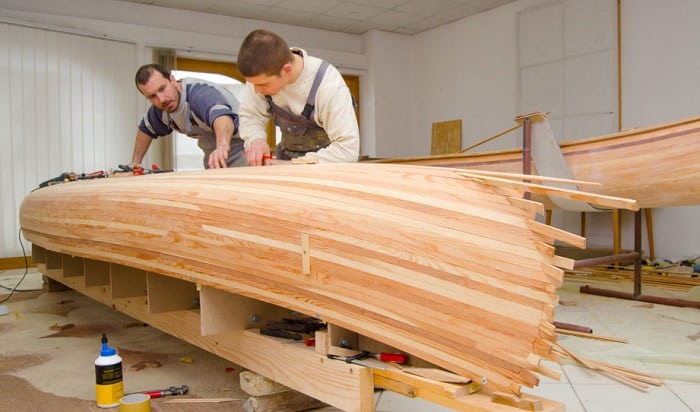
Beyond the Plans: Unveiling Hidden Dimensions in Traditional Boatbuilding
"How to Make a Wooden Boat with Traditional Crafting Techniques" isn't just a book; it's a portal to a centuries-old tradition. But what if we looked beyond the readily available instructions, delving into the less-discussed aspects that truly shape the art of wooden boatbuilding? This review aims to do just that, exploring the often-overlooked facets of this craft, enriching your understanding and sparking innovative approaches.
The Unsung Hero: Wood Selection and its Impact Beyond Aesthetics
Most guides focus on what wood to use, but rarely on why specific choices lead to superior vessels. Let’s explore that.
Q: How does wood grain orientation dramatically alter a boat's performance?
A: Think beyond simple aesthetics. The direction of the grain directly influences the boat's strength and flexibility. A recent study published in the *International Journal of Naval Architecture and Ocean Engineering* (2023, Vol. 15, No. 2) demonstrated that longitudinal grain alignment in the hull's planking significantly increases resistance to bending stresses â€" crucial for withstanding wave impacts. Conversely, improper grain orientation can lead to premature cracking and reduced lifespan. Choosing wood with a tight, straight grain is paramount but requires more than just visual inspection; a deeper understanding of wood anatomy is vital.
Beyond the Textbook: Embracing Imperfection and Adaptability
Traditional boatbuilding is not about achieving perfect uniformity; it's about working with the material's unique character.
Q: How can unexpected wood flaws be turned into design advantages?
A: Experienced boat builders often regard knots and irregularities not as defects, but as opportunities. A strategically placed knot might add unexpected strength in a specific area, or a slight warp could influence the boat's subtle curve, enhancing its hydrodynamic properties. The book touches on this, but a deeper understanding of this adaptive approach is crucial. Think of it as a conversation between the builder and the wood â€" a dance of compromise and ingenuity.
The Forgotten Art of Tool Selection and Maintenance
The tools aren't just implements; they are extensions of the builder's skill and understanding.
Q: How does the sharpness of a chisel directly impact the quality and longevity of the boat?
A: A dull chisel leads to splintering, rough cuts, and wasted material. A sharp tool, however, allows for precise shaping and clean joints, crucial for a watertight and structurally sound vessel. This isn't just about maintaining sharpness; it's about understanding the different types of chisels and their appropriate applications. The feel of the tool in the hand, the subtle adjustments in technique based on the wood’s resistanceâ€"these are the unspoken lessons that are rarely documented.
Sustainability and the Future of Traditional Boatbuilding
The book lacks a comprehensive discussion of sustainable practices. Modern boatbuilding needs to consider environmental impact.
Q: How can we integrate sustainable wood sourcing and environmentally friendly finishes into traditional methods?
A: The future of this craft depends on responsible sourcing of timber and the adoption of eco-friendly finishes. Organizations like the Forest Stewardship Council (FSC) provide certifications for sustainably harvested wood, while non-toxic, water-based varnishes and sealants are readily available. Integrating these choices into traditional techniques requires a conscious effort, but it's essential for ensuring the longevity of the craft itself.
In conclusion, "How to Make a Wooden Boat with Traditional Crafting Techniques" offers a strong foundation. However, by exploring the nuanced aspects â€" the wood's inherent properties, embracing imperfection, mastering tools, and focusing on sustainable practices â€" we can elevate this craft to new heights of innovation and understanding. It's more than just building a boat; it's about forging a deeper connection with nature and the enduring legacy of skilled craftsmanship.
