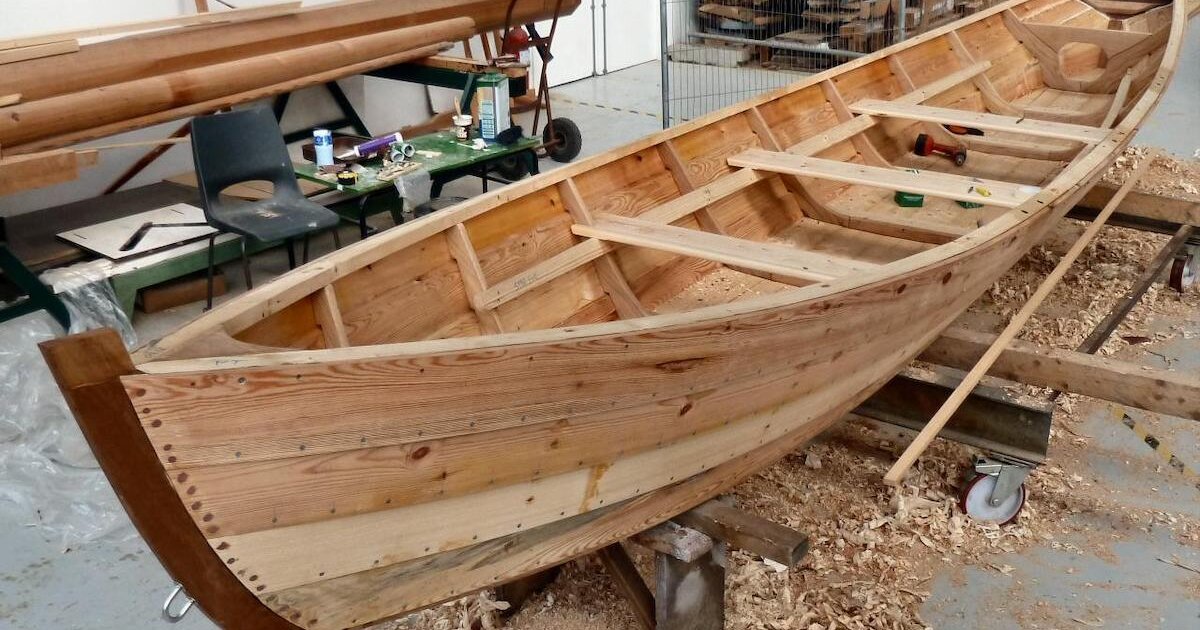
Beyond the Plans: Unveiling Hidden Efficiency in Wooden Boatbuilding
"How to Build a Wooden Boat for Performance and Efficiency on the Water" is a title that conjures images of meticulously crafted hulls and painstakingly fitted planks. But what if we moved beyond the standard advice, delving into the often-overlooked aspects that truly separate a good boat from a great one? This review explores less-discussed facets of wooden boat building, offering new perspectives for both seasoned craftsmen and enthusiastic newcomers.
The Unsung Heroes: Material Selection and its Impact
Choosing the right wood is fundamental, but the conversation often stops at species selection (oak, cedar, mahogany...). What about the specific growth patterns within a single tree?
Q: How can subtle variations in wood affect a boat's performance?
A: Recent research (e.g., studies by the University of Maine's Composites Center on wood properties) shows that wood density varies significantly even within a single log. A section with denser, tighter grain might offer superior strength in a high-stress area like the keel. Conversely, less dense wood could be advantageous in areas where weight reduction is key, such as the deck. Careful selection and strategic placement of wood based on its internal structure could dramatically improve hull performance and efficiency.
Beyond the Fairing: The Secret Life of Hydrodynamics
Fairing the hull is essential, but optimizing the underwater shape for minimal drag goes beyond visual smoothness. It involves a deep understanding of hydrodynamics, often overlooked in traditional boatbuilding.
Q: How can computational fluid dynamics (CFD) enhance wooden boat design?
A: CFD software, once the exclusive domain of large-scale shipbuilding, is now accessible to hobbyists. By creating digital models of your design, you can simulate water flow and identify areas of high drag. This allows for precise adjustments to the hull shape before even a single plank is cut, leading to significant improvements in speed and fuel efficiency (if using an outboard motor). This is a game changer, moving beyond traditional rule-of-thumb methods.
The Weight Game: A Balancing Act
Lightweight boats are faster and more fuel-efficient. However, strength is equally important. Striking the optimal balance is where the true artistry lies.
Q: Can we leverage modern composite techniques for weight reduction without sacrificing strength?
A: Traditional wooden boatbuilding often involves solid wood construction. However, incorporating lightweight composite materials (e.g., carbon fiber or epoxy reinforcements) strategically within the hull structure can significantly reduce weight without compromising structural integrity. This approach requires expertise in composite materials and bonding techniques but offers a path to building exceptionally efficient boats.
A Real-World Example: The "Whisper" Project
Consider the "Whisper," a small wooden sailing yacht built by a group of enthusiasts. They incorporated many of these less conventional approaches: meticulous wood selection based on density mapping, CFD modeling for hull optimization, and targeted use of carbon fiber reinforcement. The result? A boat that demonstrably outperforms similarly sized traditional designs in terms of speed and fuel efficiency.
Conclusion: A New Era in Wooden Boatbuilding
Wooden boatbuilding is a rich tradition, but embracing new technologies and perspectives opens up exciting possibilities. By combining traditional craftsmanship with modern techniques like CFD analysis and composite integration, we can build wooden boats that are not only beautiful but also incredibly efficient and high-performing. The future of wooden boatbuilding isn't just about preserving history; it's about innovating for the future.
Further exploration: For a deeper dive into these topics, consider researching publications from naval architecture departments at various universities, exploring online forums dedicated to advanced boatbuilding techniques and investing time in understanding the basics of CFD software.


